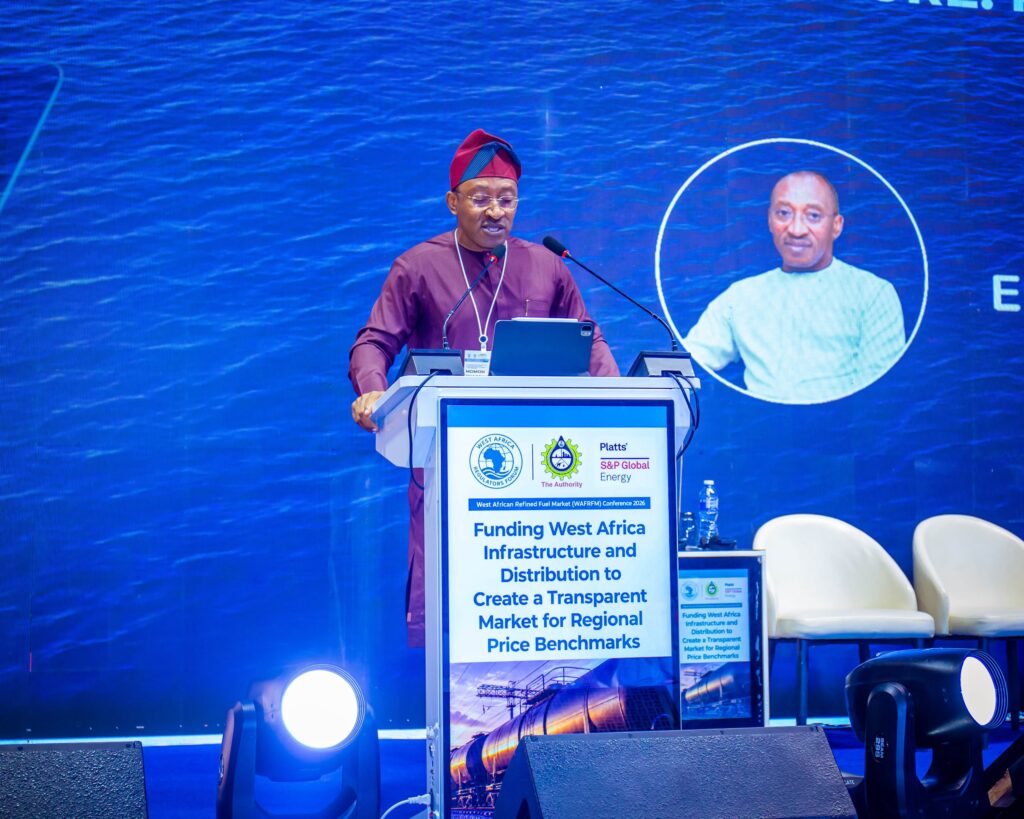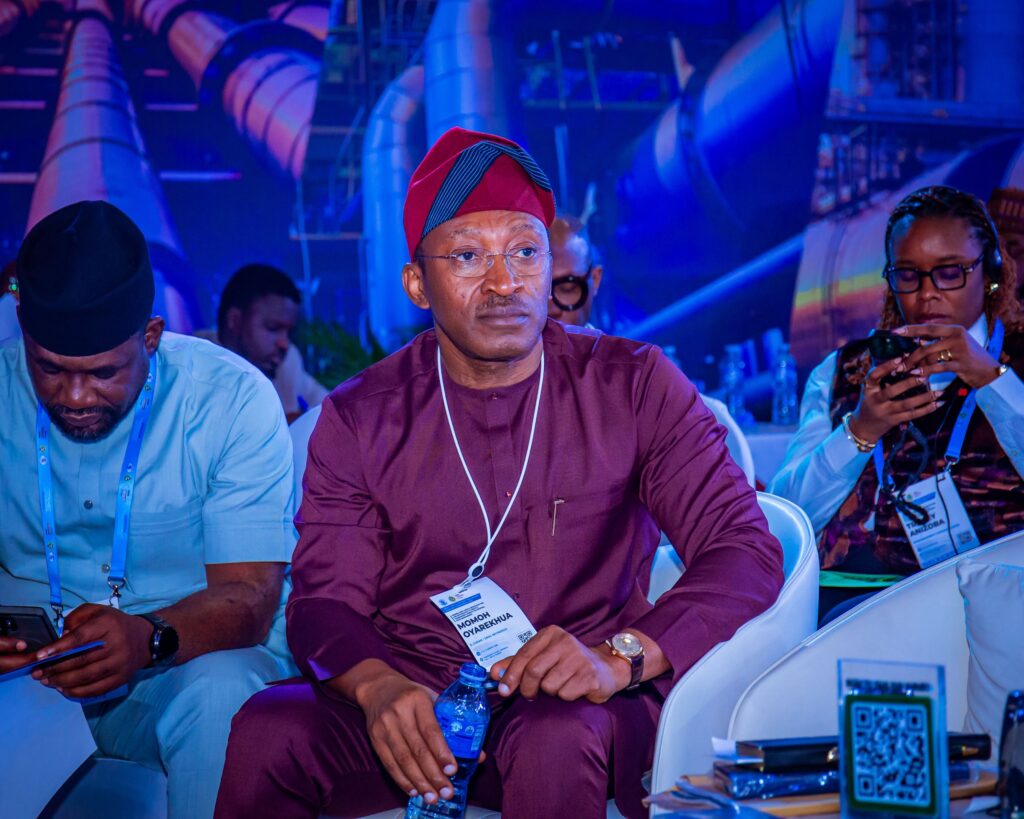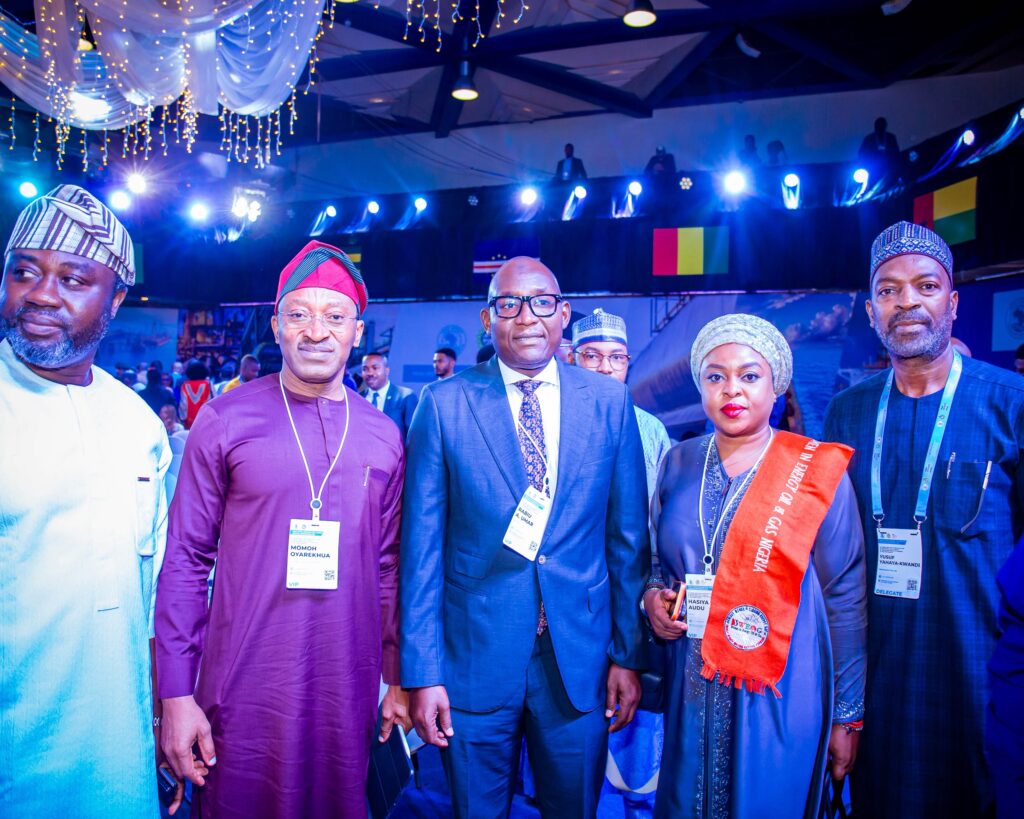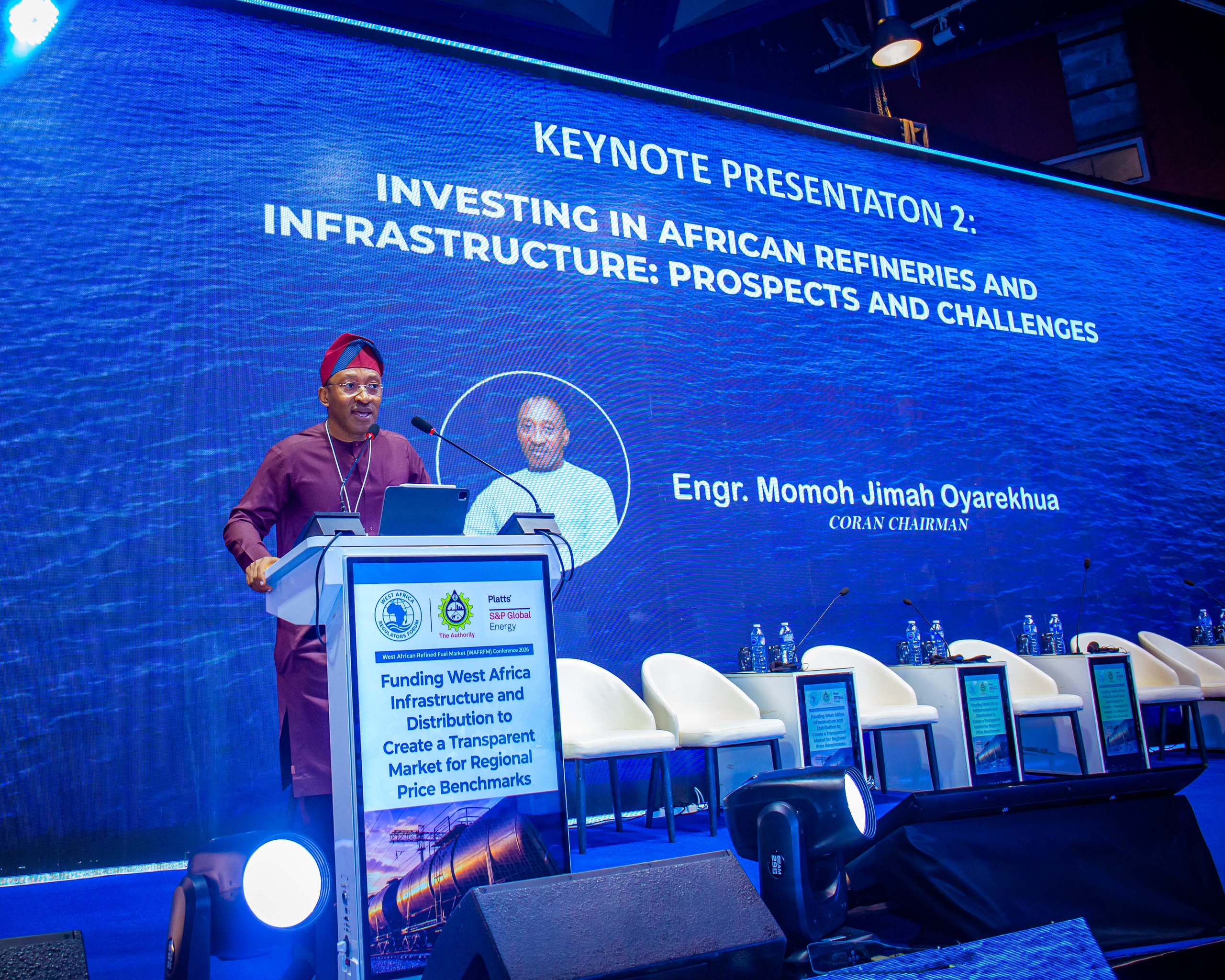
Engr. Momoh Jimah Oyarekhua, Chairman, Crude Oil Refinery-owners Association of Nigeria (CORAN), delivered a keynote presentation at the West Africa Refined Fuel Market Conference in Abuja, where he examined the prospects and challenges of investing in African refineries and critical petroleum infrastructure.
Speaking on the theme, “Investing in African Refineries and Infrastructure: Prospects and Challenges,” Engr. Oyarekhua highlighted the strategic importance of expanding Africa’s refining capacity as the continent seeks greater energy security, economic resilience and a stronger position in the global energy market.
He noted that Africa possesses significant crude oil resources and a growing petroleum products market, creating substantial opportunities for investment across refining, storage, transportation, distribution and related infrastructure.
However, he emphasized that reserves alone do not create energy security or attract sustainable capital. The continent must build the infrastructure, commercial frameworks and investment certainty required to convert its resources into reliable energy supply and economic value.
Unlocking the Refining Opportunity
Engr. Oyarekhua identified the expansion of refining capacity as a critical pathway towards reducing Africa’s dependence on imported petroleum products, retaining value within the continent and creating opportunities for industrialisation, employment and technology development.
For Nigeria in particular, the emergence of new large-scale and modular refining capacity represents an important shift in the downstream landscape. The opportunity now is to ensure that these investments are supported by reliable crude supply, efficient logistics, appropriate infrastructure and a competitive market environment.
Infrastructure is the Backbone
The keynote further underscored that refinery investment cannot be viewed in isolation.
Efficient crude evacuation systems, pipelines, terminals, storage facilities, reliable power, marine infrastructure, road networks and product distribution systems are essential to the viability of refining projects.
Without these interconnected infrastructure assets, refinery capacity may exist without the ability to operate efficiently or reach markets competitively.
Financing and Investment Certainty
Another major consideration highlighted was access to long-term and affordable capital.
Refining and petroleum infrastructure require significant upfront investment and long development timelines. Investors therefore require greater certainty around crude supply, regulation, market access, pricing, infrastructure availability and policy consistency.
The message was clear: Africa must move from simply attracting capital to creating the conditions that make capital confident enough to stay.
Building a Regional Energy Market
The discussions also reinforced the importance of regional integration.
As refining capacity grows across Africa, the continent has an opportunity to develop stronger intra-African petroleum trade, establish more transparent market mechanisms and create regional price references that better reflect local market fundamentals.
This aligns strongly with the broader objective of the conference: developing the infrastructure, distribution systems and market transparency required to position West Africa as a credible petroleum trading and pricing hub.
From Potential to Execution
The conference therefore provided an important platform for policymakers, regulators, refiners, traders, investors and other industry stakeholders to examine what is required to move Africa’s refining ambitions from potential to execution.
For CORAN, the message remains consistent: Africa must refine more of its resources at home, strengthen the infrastructure that supports refining, improve access to capital and create a predictable investment environment capable of sustaining long-term private-sector participation.
The future of African refining will ultimately depend not only on how much capacity is announced or constructed, but on how effectively the continent connects crude supply, refining capacity, infrastructure, financing and regional demand into one integrated energy system.
As Africa pursues energy sovereignty, the opportunity before the continent is significant. The priority now is to convert that opportunity into bankable projects, operational refineries, resilient infrastructure and competitive regional markets.